Category: Branding

  • Measuring the Value of Your Company’s Branding

    Measuring the Value of Your Company’s Branding

    [vc_row][vc_column][vc_column_text]Pretend you’re the CMO of “Big Company X” and over the last several weeks you and your marketing team have worked overtime to prepare the marketing plan and strategy for the next fiscal year. Then the day comes for you to present your plan to your fellow C-suite executives. You pour over the details of the marketing plan with enthusiasm, communicating what you think is the need for marketing dollars to be spent in this and that area. Then the CFO stands up and demands to know how your plan will create brand equity and value to customers and stockholders. How would you answer?

    Well, you’re not the CMO of “Big Company X”. You’re the owner or proprietor of your own business. Being the chief marketer is just one of the hats you wear, along with chief financial guru. Franky, you too wonder what the concrete value your brand has, and you’re not sure what brand equity is.

    Defining brand value and equity

    Brand value is the dollars and cents of the brand or financial value shown on a balance sheet. Brand equity, while harder to define, is generally made up of your customers’ knowledge, attitude, perceptions and behaviors toward your brand. The better your brand equity is the more brand value you’ll bring to the bottom line.

    How to increase brand value with brand equity

    There are several steps you can put in place to increase your brand equity and value:

    • Measure the results of your marketing campaigns, such as getting positive feedback on social media posts, blogs and print marketing efforts. If you are not getting the results you need or if they get stagnant, retool them for a more positive impact.
    • Listen to your customers. What products or services most interest them? What do they get excited about and what do they not like? When they express passion about your brand, get them to open-up and share details. When they are dissatisfied, show humility, listen to them and then seek to overcome it.
    • Make sure customers have channels to express their feedback. These can include comment cards, surveys, social media channels, comment areas on blog posts and web-sites, and asking them face-to-face what they think of your product and services.
    • Storytelling – talk about your real customers’ experiences and what your products and services mean to them. Another aspect of storytelling is to show how your brand supports the community. Share images of both your customers with their story and pictures of your community involvement.

    Back to the boardroom

    The next time your CFO or the one wearing a CFO hat (you) questions your marketing budget and how you are going to go about creating brand equity and value, you’ll now be more equipped to answer that question. You’ll be able to put concrete plans in place to make your company more valuable.

    How do we measure up?

    Last, how are we creating value and equity in your brand? We at Serff Creative Group want to know how we measure up with you. Please take a few moments to jot down your thoughts on the comment section of this blog, call us at 303.537.8705, email us at info@serffcreative.com or post it on Facebook or Twitter.

    Top Branding Agencies of 2020 according to DesignRush[/vc_column_text][/vc_column][/vc_row]

  • Creating a Marketing Plan

    Creating a Marketing Plan

    No business owner ever decided one day, without any forethought or planning to open their business in hopes that it would succeed. Or if they did, the likelihood of its success would be very slim. Business owners know that it takes months, sometimes years of planning before opening a business. Key to your business success revolves around one word, marketing, and how this breaks down into setting marketing goals and communications strategies, a marketing budget and remembering to be agile in your marketing efforts.

    Setting Marketing Goals and Communications Strategies

    Prior to setting marketing goals every business owner must perform a strategic and detailed situational analysis of the marketplace. Once this is done, marketing goals can be thought out and put in place. Marketing goals should include who your target audience is and what the personas are within that target audience. After personas are decided, with the help of a creative agency, you can decide what your logo and graphics will look like. Then comes deciding how to communicate with your customer and which specific media to use; print, TV, radio, collateral and a properly branded website. Last of all, set a specific goal of your financial needs you want to achieve with your marketing efforts. For instance, make your goal specific with an increase in margin on a set number of products and services or “X” % increase in sales.

    Setting a Marketing Budget

    While there is no magic number that you’ll need to dedicate to your marketing budget, a good rule of thumb is a minimum of 10% of revenues. Some companies dedicate 50% of their revenues. If you can do this – great! Whether it is a little or a lot be very careful to spend it on the right marketing initiatives and to constantly evaluate and re-evaluate where your marketing dollars are being spent and re-allocate as necessary.

    Be Agile

    The word agile comes to mind when watching a star track athlete. In the warm up routine of a track race the athlete is loose and limber, but when the camera shows a close-up of his or her face and looks in to his or her eyes, the athlete has a laser focus on the task at hand – winning! When the race starts the runner paces him or herself to maintain an edge, adjusts his or her pace and when the proper time comes they sprint to the finish line. The same applies to marketing; train hard, have a plan for winning, be loose and limber, change pace and plans when necessary. By doing so your success rate of winning the race over your competitors will increase greatly.

    Your Roadmap to Success

    Following these three basic steps to creating a marketing plan will give you the basics to begin your marketing efforts and will help you on your roadmap to success. For additional tips on marketing a small business we encourage you to read our past blogs and sign up for future ones so they can be delivered right to your mailbox.
  • Why Businesses Need Strong Logos as a Piece of Their Marketing Strategies

    Why Businesses Need Strong Logos as a Piece of Their Marketing Strategies

    [vc_row][vc_column][vc_column_text]

    As a small business owner, whether you’re an expert marketer or someone who dabbles in it, you know the importance of appropriately branding and marketing your business. The branding and marketing mix includes the subject of this blog (logo design), along with what we have covered in previous blogs; website branding, having your brand consistently represented on social media, and branding that goes beyond your logo. To zero in on logo design, there are several elements that often come into play.

    Simplicity is Key

    What is a logo? Simply stated, it’s the graphic and visual identifier for your brand. A logo is like a key that opens the door to a big, beautiful home. A thoughtfully designed logo will open-up customers to your business. A poorly designed logo will keep customers out. Simplicity is key to a properly designed logo. Case in point, if I were to flash in front of you several logos; the Apple logo, the Nike logo, or the “f” from Facebook, instantly you’d identify them with the company brands. These well-known brands understand the importance of creative simplicity and you should, too.

    Make it Unique and Easy to Interpret

    Giant brands, such as the ones mentioned above, have the luxury of large advertising budgets, marketing teams, and focus groups for logo selection. While small businesses don’t have this luxury, they have at their fingertips graphic designers that can easily be found on the web and marketing agencies that cater to small businesses. Even if you don’t have the financial resources to outsource your logo design and prefer to do it yourself, Serff Creative recommends that you have a focus group review final choices once they are complete. Focus groups can be as simple as a few friends and colleagues who understand marketing and design who will give you constructive input on your logo design ideas.

    Graphics and Typography Matter

    Graphics is the art and design of your logo. Typography is a subset of graphics and is generally associated with the font that is part of your logo. When choosing typography, be careful that it mirrors your brand qualities. For example, iconic, vintage brands like Harley-Davidson have chosen fonts and typography that are vintage and rugged because it matches their brand qualities. Their style of fonts and typography may not be appropriate for your brand.

    Compelling Logos

    The above is a summary of the thought process that should go into logo design. While it’s not comprehensive, it’s important to understand that logo design is an integral part of your brand as it relates to promoting the products and services of your company. The logo needs to be uniquely designed to include colors and design concepts in a way that is identifiable to your brand qualities. The end goal is to have a logo that has a long-lasting impression on your customers.[/vc_column_text][us_btn label=”Contact Us Today for a Free Consultation!” link=”url:http%3A%2F%2Fwww.serffcreative.com%2FneW_5ite%2Fgraphic-design-agencies%2F|||” style=”3″][us_separator size=”small”][vc_column_text]

    Or, are you just starting out and need a basic logo package?

    We offer our basic identity package to help you get on the right foot for your business – enabling you to establish a great presence to your customers.[/vc_column_text][us_image image=”7639″ onclick=”custom_link” link=”url:http%3A%2F%2Fwww.serffcreative.com%2FneW_5ite%2Fcorporate-identity-development%2Fdenver-logo-design%2F|||” animate=”afb”][/vc_column][/vc_row]

  • How Graphics Contribute to Your Brand Visibility

    How Graphics Contribute to Your Brand Visibility

    [vc_row][vc_column][vc_column_text]Best-selling, branding and marketing expert, and author, Martin Lindstrom, once communicated the importance of having a smashable brand. This term dates back to 1915 when the Coca-Cola Company asked designers to design a bottle that consumers would still recognize even if you threw it on the ground and broke it into many pieces. Equipped with the proper graphics, this bottle is still a signature item promoting their brand today.

    Graphics play a huge part in communicating the right message to get your customer to engage with and buy from your brand. While brands like Coca-Cola have enormous marketing budgets to create the right graphics, you as a small business owner likely do not. While we don’t want to overwhelm you with the inordinate amount of thought and detail that goes into graphics, here are some basics to consider:

    Color and Font

    When considering graphics selection and font, you need select just the right color scheme. For instance, if you want to communicate that your brand is environmentally friendly, an earthy shade of green and a sky-like shade of blue would be appropriate. If you want your brand to communicate urgency or immediate action, a red and yellow color scheme may be best. For example, have you ever noticed that almost all fast-food restaurants who want their customers to take action and get a quick meal, have yellow and red as their dominant graphic colors?

    Emotion and Calls to Action

    The appeal to emotion combined with the right calls to action need to be a core part of your graphics selection. As one example, have you noticed how many charitable organizations use visual personas describing the type of person you’ll be helping if you contribute to their charity? A key component of your graphics includes your calls to action. Messages on your website such as “subscribe to our free newsletter” or “click here for more information” are effective. Print marketing messages communicating urgency can be a good idea as well, such as “limited time offer.” Other, more subtle calls to action can be appropriate as well, such as a dentist who offers free dental care tips on their website.

    Consistency and Clarity

    The importance of consistency and clarity in your graphics across all mediums is vitally important for communicating your brand. To make sure your graphics are consistent and clear, use the 10,000 foot approach. Immediately after departing the runway when you’re in an airplane, you’re not able to see the landscape that you can at 10,000 feet above the ground. Look at all your graphics and marketing efforts from a distance and then descend in to see what needs to be fixed for consistency and recognizability.

    Summary

    Just like other aspects of properly marketing your brand, the time and effort you think you may need to dedicate can seem overwhelming. In reality, it is not as difficult as it may seem. For creativity and smashable brand ideas from an expert, please contact us. Serff Creative Group, Inc. is a “top Denver branding agency” and has assisted many small businesses stay ahead of the curve whether it’s implementing the right graphics or other aspects of marketing.[/vc_column_text][us_btn label=”Contact Us Today!” link=”url:http%3A%2F%2Fwww.serffcreative.com%2FneW_5ite%2Fgraphic-design-agencies%2F|||” style=”3″][us_separator][vc_column_text]

    SEE WHERE YOUR COMPANY
    STANDS ON YOUR BRANDING:

    Review yours with this 10-Point Assessment for Your Company Brand.[/vc_column_text][us_btn label=”View the Details” link=”url:http%3A%2F%2Fwww.serffcreative.com%2FneW_5ite%2F10-point-brand-assessment%2F|||” style=”3″][/vc_column][/vc_row]

  • Creating Connections with Personas

    Creating Connections with Personas

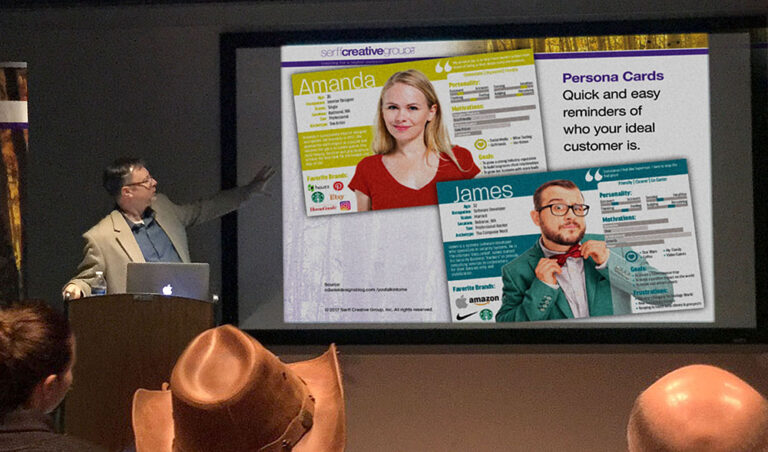
    [vc_row][vc_column][vc_column_text]Marketing can be very complex. The thought process of getting the right message to the right person at the right time on the right medium can be overwhelming. This complexity grows when you think about tailoring your marketing efforts to specific individuals, known as personas. If you are overwhelmed with adding yet another piece to the marketing puzzle, don’t be. Developing and implementing the basics of personas into your marketing efforts is quite simple.


    What is a Persona and how do I develop them?

    A persona is the aspect of someone’s character that is presented to or perceived by others. In marketing language, it’s a fictitious, generalized version of a real customer – yours. Think of it as a buyer profile. Setting up and selecting personas can get very detailed or be very basic. For starters, I recommend setting up basic personas for three buyer types. While there is some guesswork involved, it’s best to make it as factual as possible because they need to represent a real customer. It is best to set up your personas based on your customer interaction with core customers. Of your three personas, find out why and when they buy from you and what triggers their spending money with you. Think of it this way. If your three personas buy the exact same product from you understand why each buys and for what separate reasons. Perhaps one persona is attracted to the variety of products you offer, while another is attracted to your brand because of peer recommendations, while another person is attracted because of convenience.

    Give Your Personas a Personality

    Once you’ve gathered up enough data on your three personas have fun and name them. For instance persona one can be Bob, a 30-35 year old married male with two young children who buys because of the variety your brand offers. Persona two, Karen, could be a 20 something millennial female who is greatly influenced by the peer recommendations of her friends on social media. Persona three being Carl, could be the 50 year-old established career executive who is at the pinnacle of his earning potential and buys because he or she never has time to shop and doesn’t mind paying extra for your product because it is convenient.


    Communicate the Appropriate Message

    Next, identify a message that will resonate with your personas, not one that you think they need to hear. Design these messages around their character traits and buying habits and then communicate these messages across your marketing mediums, print, social, web, direct mail and the like. It’s also important to have to have testimonials from your personas and visual images to match their profile. Don’t overly complicate your messages. Most of the time the features and benefits of your business can be verbally massaged to match the buying patterns of your personas.

    While developing personas is a critical marketing element, don’t be overwhelmed with an inordinate amount of detail. It’s really not as complicated as it might seem at first. As always, Serff Creative is here to assist you with all of your marketing needs, including developing and implementing personas.[/vc_column_text][/vc_column][/vc_row]

  • Website Branding: First Impressions Count

    Website Branding: First Impressions Count

    [vc_row][vc_column][vc_column_text]In a business or personal setting, we all strive to make good first impressions. This is followed by lasting ones that we hope will develop into long-term business or personal relationships.A recent study indicated that it takes only one-tenth of a second to form first impressions about a person. Websites are perhaps judged even more quickly. To immediately catch the eyes of someone browsing your website, Serff Creative Group recommends the following:

    Branding, Graphics and Website Organization

    As mentioned in a previous blog, branding is the holistic approach you take to connect individuals to your company. It can be your physical brick-and-mortar or virtual storefront, the customer service people receive when they interact with your brand, social media sites and other customer-facing contact. Have you ever visited a business in-person and found that the customer service is bad, their brick and mortar location is disorganized, dirty, dull or dingy? If a website is poorly done, it can communicate the same sloppy message. To avoid this make sure your website is well designed, with vivid graphics and is easily navigable.

    Longing for More

    When you meet a prospective customer at a social event and they ask “So what do you do?”, you should be prepared to give them a brief 30-second statement about your businesses or brand. This should be designed to get the customer to say, “Tell me more.” The same holds true for websites. In addition to the basic “contact us” tab on your website, include customer testimonials, blogs, case studies or special offers. Even better; provide guests on your website the opportunity to engage with your brand on social media. (See this blog on creating and maintaining brand consistency on social media.)

    Getting Started or Starting Over

    If after reading this, you may feel compelled to start, overhaul, rebrand or just tweak your website, but are overwhelmed with the time or talent commitment it will take to complete this task, don’t be. If you are starting over and want to design a website yourself, web design companies such as WordPress or GoDaddy are very user friendly. If, however, you think you want a professional to design or redesign your website, Contact Us. We have all the tools necessary to make your brand stand out on the web and get results. Then you have the Internet presence to make a positive first impression.

    Best Web Design Agencies of 2020 according to Web Design Agency Rating Platform[/vc_column_text][/vc_column][/vc_row]

  • Tradeshow Marketing and Branding

    Tradeshow Marketing and Branding

    [vc_row][vc_column][vc_column_text]

    STAND OUT IN THE CROWD
    BEFORE, DURING, AND AFTER

    A routine business development effort is participation in trade shows where many small businesses use this tactic to generate prospects. One positive side of the trade show equation is that it can be a terrific way to give your brand and business the exposure it needs. On the other side of the equation, trade shows can be very expensive! With the understanding that you have picked the right trade show for your business, here are tips to help you make the most of your trade show dollar.

    Marketing and Branding Before the Show

    Creating brand awareness before customers walk onto the trade show floor is essential. Most trade shows, for an extra fee, allow you to market to customers before the show. Plan these well in advance and you’ll be off to a good start before the show begins. Pre-show marketing can be done in several ways: sending customized emails and mailers to prospects, placing pop up or banner ads on the trade show website, and setting appointments at specific times at the trade show along with promoting your brand on social media using intriguing posts and including trade show appropriate hash-tags.

    Marketing and Branding During the Show

    It’s the moment you have been anticipating for months. You’ve done all the pre-show marketing and now it’s day one of the show. An announcement over the loudspeaker comes across of “the trade show is now open.” You eagerly anticipate customers flocking to your booth. There are numerous ways to draw them to your booth. Sponsorships are one method. The type of sponsorships available vary from show to show. Some will allow you to purchase floor decals, aisle banners, sponsor coffee breaks, lunches, evening events and educational sessions. Other options are audio visual presentations and announcements at the show. Taking advantage of these opportunities is necessary as is having an engaging and interactive booth. Interactive ideas can be games and giveaways. These ideas are well and good and a good start to attract prospects. The biggest emphasis; however, needs to be the personal connection at the booth. Represent yourself professionally, enthusiastically, and genuinely. It’s important to keep a smile on your face and interact with each customer or prospect.

    Marketing and Branding After the Show

    Post-show marketing is often the most forgotten element in trade show marketing and branding. It’s easy to lapse in this area because trade shows can be exhausting, but it’s not excusable. Some trade shows last two to four days and when it’s over you find yourself anxious to get back to the regular work routine. Proper post-marketing means you must follow up with each prospect that stopped by your booth. It’s highly recommended to send mailers after the show. For the prospects who wanted general information on your company, a post-card may be appropriate. The more specific the need of the customer or prospect, it demands a more specific follow up. Sending follow-up letters, emails, or placing phone calls are all sufficient. Last, be sure to record your visitor contact information in a centralized database and be sure to stay in touch with them on a regular basis so the prospect of today, becomes a customer tomorrow.

    Need Help?

    Still overwhelmed at the thought trade show marketing? Serff Creative Group, Inc. has more than 18 years of experience in trade show marketing. We’ve helped hundreds of our customers create a proper strategy and increase their revenues and customer base.

    [/vc_column_text][us_btn label=”Contact Us, we’d enjoy helping you!” link=”url:http%3A%2F%2Fwww.serffcreative.com%2FneW_5ite%2Fgraphic-design-agencies%2F|||” style=”3″][/vc_column][/vc_row]

  • Creating and Maintaining Brand Consistency on Social Media

    Creating and Maintaining Brand Consistency on Social Media

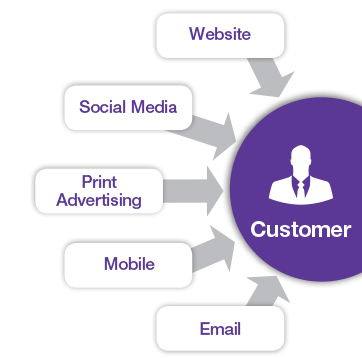
    At some point, we’ve probably all seen one or more variations of the marketing pie-chart. It is a perfectly rounded image with your customer at the center. Representing various pieces of the pie are the marketing channels with social media being one of them. This pie-chart image is designed to convey brand consistency across all channels. This insures that your customers will have a similar brand experience regardless of the channel that reaches him or her. The social media channels or pieces of the pie are a very important part of this wheel. If this gets you to think and fret over your brand identity, fear not. It’s really no more complicated than managing and maintaining your own brand personality.

    CREATING THE PIE

    How do you get your brand to have one identity across all social channels? Preparing and baking this pie is not as difficult as it seems:

    1. Imaging and Graphics

    Does your brand have similar images or graphics across all social media channels? A consistent and creative visual identity is essential for a positive brand experience. Not doing so could confuse your customer. You’ll also notice that each social channel has a unique layout. Make sure images are properly formatted for a consistent look.

    2. Brand Voice

    Every brand needs a personality or voice. What is this for your brand? Just like a human voice, there are many variations, from tenor to baritone. Whatever the pitch of your brand voice is, it should always have integrity, be authentic, helpful, and seek to serve others. If you’re not sure what your brand voice is, get to know your audience. If you are really stuck, think about your favorite brands, why you follow them and how they interact with you. Mimic their brand voice or get ideas from their approach to come up with the overall personality that best suits your brand.

    3. How often and which channel?

    When a customer calls your business, has a conversation with you in-person, or sends you an email, what do you do? It’s a no-brainer; you simply respond. Yet eighty percent of businesses who start out using social media marketing quit after three short months. Just like you would never stop engaging with a customer on other channels, neither should you on social media. The key is to consistently post on social media. Be selective. Choose two or three sites where you will find your customers. Posting once or twice each month isn’t enough to be visible. Intersperse your social media postings with a direct mail campaign or email campaign. You want them to remember you and your company and easily find you.

    4. Analytics

    And not least, it’s very important to regularly look at the results of your marketing efforts. If one channel is more effective at reaching your customer, make it a priority and enhance it AND be sure not to neglect the other channels.

    BRAND STRATEGY

    While developing a social media strategy and maintaining it can seem overwhelming, it’s really no different than a brand strategy we manage every day — our own. As individuals we have a brand persona. Our friends and family know us for our personality traits and expect us to act accordingly. At times we’ll test our own personality barriers and do something that is slightly out of character. If done with thoughtful intentions, it can lead to closer relationships or a good laugh. Creating and managing your social media marketing efforts are no different.

  • Workshop: Branding Your Business Through Content Marketing

    Workshop: Branding Your Business Through Content Marketing

    [vc_row][vc_column][vc_column_text]

    Join Us May 18, 2017 from 9:30 am12:45 pm


    A NEW workshop series to help grow your business from AME and Serff Creative Group, Inc.

    Join us for a morning workshop to help you understand and develop your content marketing plan for YOUR business.

    You will examine the many aspects of how brand consistency, multichannel marketing, and strategic planning in your business will help increase the success of your marketing efforts, grow your email lists, and build your business more effectively.

    This event is limited to 38 people to enable discussions and planning with other attendees. Business owners, marketing strategists, and others will have an opportunity to fine tune their marketing efforts enabling you to walk away with an actionable plan for your business.

    Here is an example of multichannel marketing through proper branding:

    Date:

    Thursday, May 18th, 2017
    9:30am-12:45pm

    Who should attend?

    Owners of any business, marketing strategists, and others who want to improve their growth online and beyond.
    Topics will include:

    • Brand Consistency
    • Content Marketing
    • Email Strategy and Planning
    • Social Media for Business
    • Multichannel Marketing
    • Finding your niche (within your client list and prospects)
    • Develop topics for emails/blog posts/social media

    Location:

    Koelbel Library
    (Holly and Orchard in the DTC area)
    5955 S Holly St, Centennial, CO 80121
    View in Google maps

    Cost:

    $89/person
    Includes refreshments and lunch

    [/vc_column_text][us_btn label=”Signup today!” link=”url:http%3A%2F%2Fwww.ameprogram.com%2Fevent%2Fbranding-your-business-through-content-marketing%2F|||”][/vc_column][/vc_row]

  • The Value of Multichannel Marketing

    The Value of Multichannel Marketing

    [vc_row][vc_column][vc_column_text]

    ARE YOU USING MULTICHANNEL MARKETING TO GET RESULTS FOR SUCCESS?

    Multichannel Marketing in a Nutshell

    In the maze of marketing terms and channels, it is easy to get lost in the many possible options to appropriately and strategically market your brand. Yet actionable steps are necessary to effectively do so, and in this case, using the available multiple marketing channels. In this brief article, we’ll look at what multichannel marketing is, a good example of it, and how to implement it.

    What is Multichannel Marketing?

    Multichannel marketing is simply cohesively utilizing several channels to get and keep the attention of your customer. A channel is defined as the method used to reach your customer. Examples of a channel can be the physical location of your business, print advertising, a website and social media efforts along with TV, radio and other digital channels.

    An Example of Multichannel Marketing

    Medical Group Management Association® ( MGMA® ) is a good example of a robust mix of B2B and B2C branding that has good a multichannel marketing strategy in place. On their Twitter page they post regular and relevant content that is helpful to their members or prospective members. If you click on the web link on their tweets, this will take you to their website. On their website, they offer relevant information about their purpose and brand with their many resources they offer to members and prospects. Members receive email and print marketing materials with valuable information that increases their knowledge in practice management. This includes links to their website and social media with contact information for easy access to connect with the association.

    Actionable Steps to Take

    The above all sounds well and good, however before launching into multichannel marketing, the following steps are recommended:

    • Define your brand: What need or want do you fulfill for your customers? Who is your intended audience? Who is your actual audience? What are the best channels to market to them?
    • Make sure your brand is cohesively represented on all channels with your logo and brand identity. (Click here for helpful tips on logos and brand identity.)
    • Post content on social channels that is consistent, regular, and meaningful to your customers.
    • Don’t overwhelm your customers by marketing to them too much and let them interact with you on the channels of their preference.

    Results Count

    And not least, it’s very important to regularly look at the results of your marketing efforts. If one channel is more effective at reaching your customer, make it a priority and enhance it AND be sure not to neglect the other channels.

    Still Confused and Overwhelmed?

    The intent of this blog is to review the basics of what multichannel marketing is and an overview of how to implement it. It’s understandable though to still be overwhelmed with the implementation because other business priorities get in the way and are important as well. This is why Serff Creative Group exists — to help you with your marketing needs.[/vc_column_text][us_btn label=”PLEASE CONTACT US IF WE CAN ASSIST YOU!” link=”url:http%3A%2F%2Fwww.serffcreative.com%2FneW_5ite%2Fgraphic-design-agencies%2F|||” style=”3″][/vc_column][/vc_row]